Comparative & Superlative (more / most vs. -er / -est)

Lesson aims: Revision of how and when to use more/most and -er/-est when constructing comparative and superlative sentences.

Quick description: As a class, students must first categories adjectives into four columns depending on the number of syllables and ending of each adjective. (As an attention grabber, students are not told what rule governs this categorisation and instead have to work out what’s happening.) When the four column table of adjectives is complete, the appropriate form of more/most and -er/-est is assigned to each column. Finally students practise by comparing fellow classmates.

Sub-aims: revision/strengthening of adjective vocabulary.

Teaching Materials / requirements:
• A white board
• three different coloured whiteboard markers – this plan uses blue, red and black.
• Blutac

DOWNLOAD LINKS: word doc of lesson plan flashcards

Preparation:

Print out flashcards of adjectives (I recommend sticking them onto card, or printing straight on to card to make them re-usable.) [WORDS: old, big, strong, sound, cool, hardener, sad, cold, hairy, funny, silly, dirty, smelly, easy, lazy, happy, friendly, clever, nervous, boring, careful, normal, annoying, exciting, dangerous, difficult, expensive, confident, attractive, successful, interesting, complicated, comfortable.]
• Look at flashcard words and think of concept check questions for each (ie ways to confirm students know the meaning of each word).

Assumed knowledge:

A knowledge of comparative and superlative using more/most and -er/-est.

Anticipated problems > solutions:

  1. Students may not feel comfortable being compared or the activity may open students up to mockery/bullying >Solution > By focusing on positive adjectives this can largely be avoided, but if you feel your class may be unkind, you may choose to google search images of famous people and put them side by side on the board – comparing these instead.

Lesson plan and rationale:

1. Without speaking, draw a blank table as shown below: Draw three columns. Add the dots (representing syllables) above each column. Divide the middle column into two with a dotted line.

Rationale: Instantly grabs attention of the class.
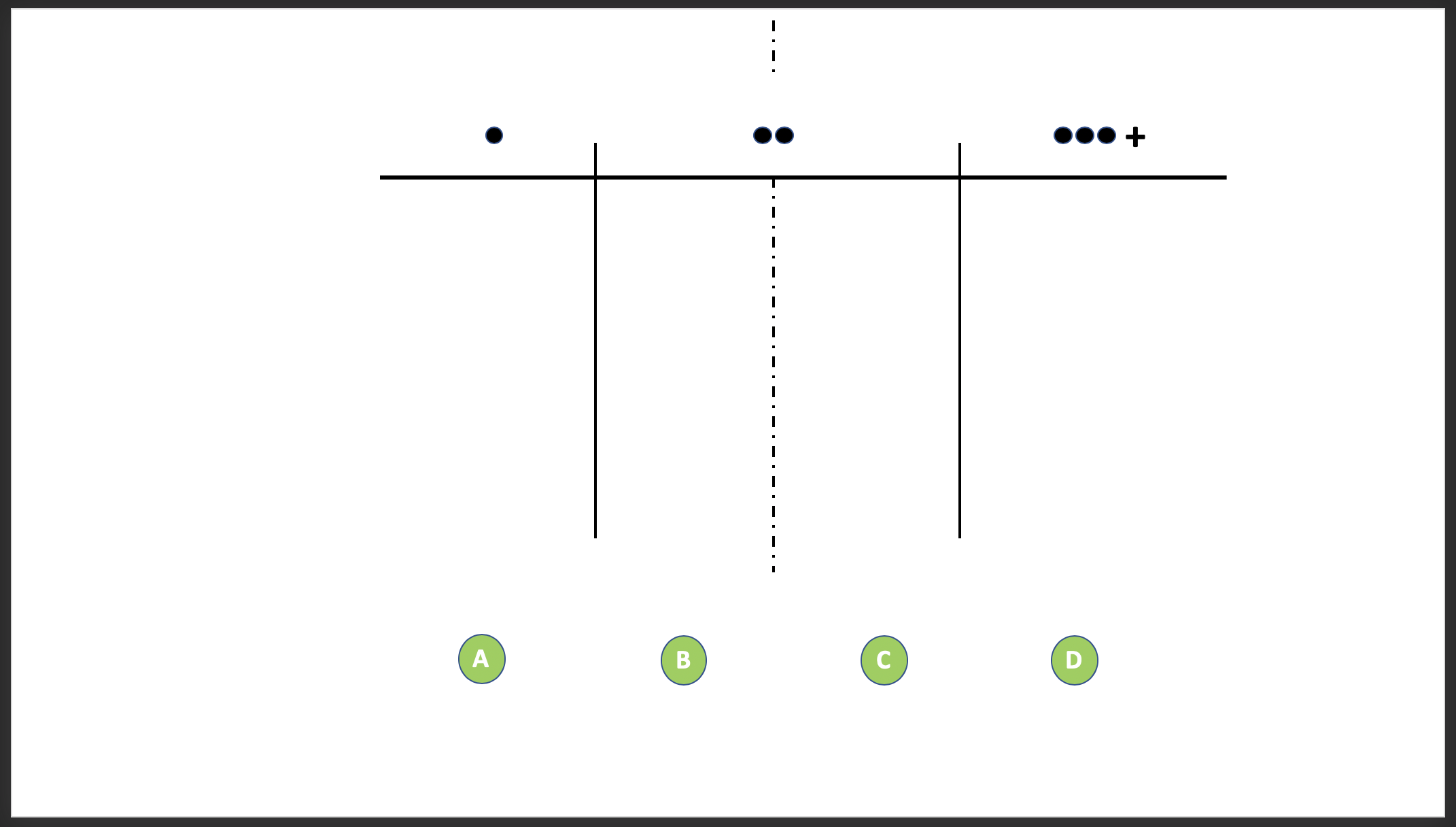
2. One by one, reveal adjective flashcards. Hold up a card, concept check the meaning then ask “which column?” Initially the students will be baffled. Use body language to invite guesses. When you hear the correct column mentioned, blutac the flashcard in place. [Note: you as the teacher know that column A is for one-syllable words, column two for two-syllables words ending in -y, column C is other two-syllable words, column D is thee-syllables and more.]

Rationale: The seemingly random nature of the categorisation really draws in students who try to work out what the rule is without you specifically asking. Whilst this is happening, you have a chance to check students know all the definitions of the adverbs..

3. Continue through all of the cards, gradually giving extra hints about the rule. For example, when the correct column is guessed, repeat the word and tap out the syllables by tapping the dots above the column with a whiteboard pen. Similarly, you can get to a stage where you keep listing the whole of column B before you add a new word (really highlighting the fact they all end in -y). Ensure that the irregulars ‘bad’ ‘good’ and ‘far’ are placed slightly to the left of column A.

Rationale: Students get a kick from working out what’s happing. The better students will eventually explain it to those who are last to understand. .

.
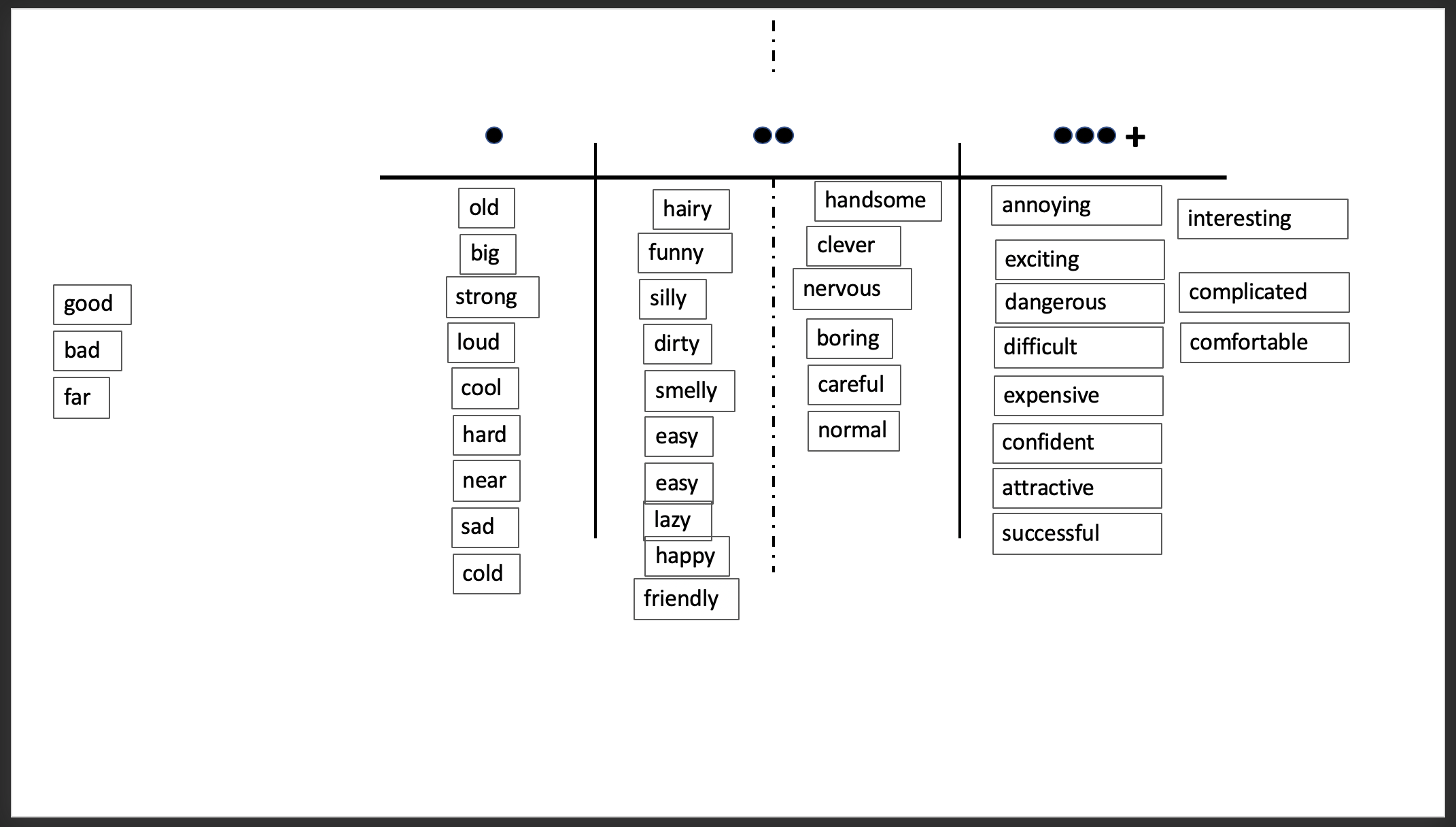
4. When the table is complete, explicitly ask the students the rule for each column. Next add the coloured bars and colour coded sentence structure, as shown below. Use an example like ‘old’ and ask “Which is correct: ‘Pete is older than Jose’ or ‘Pete is more old than Jose’?” Repeat this with the superlative. Then repeat with a 3 syllable adjective. Point to the table each time to reinforce the connection between column A and B (-er/-est) and columns C and D (more/most).

Rationale: Locks the connection between syllables/word ending and correct comparative/superlative structure. .

.
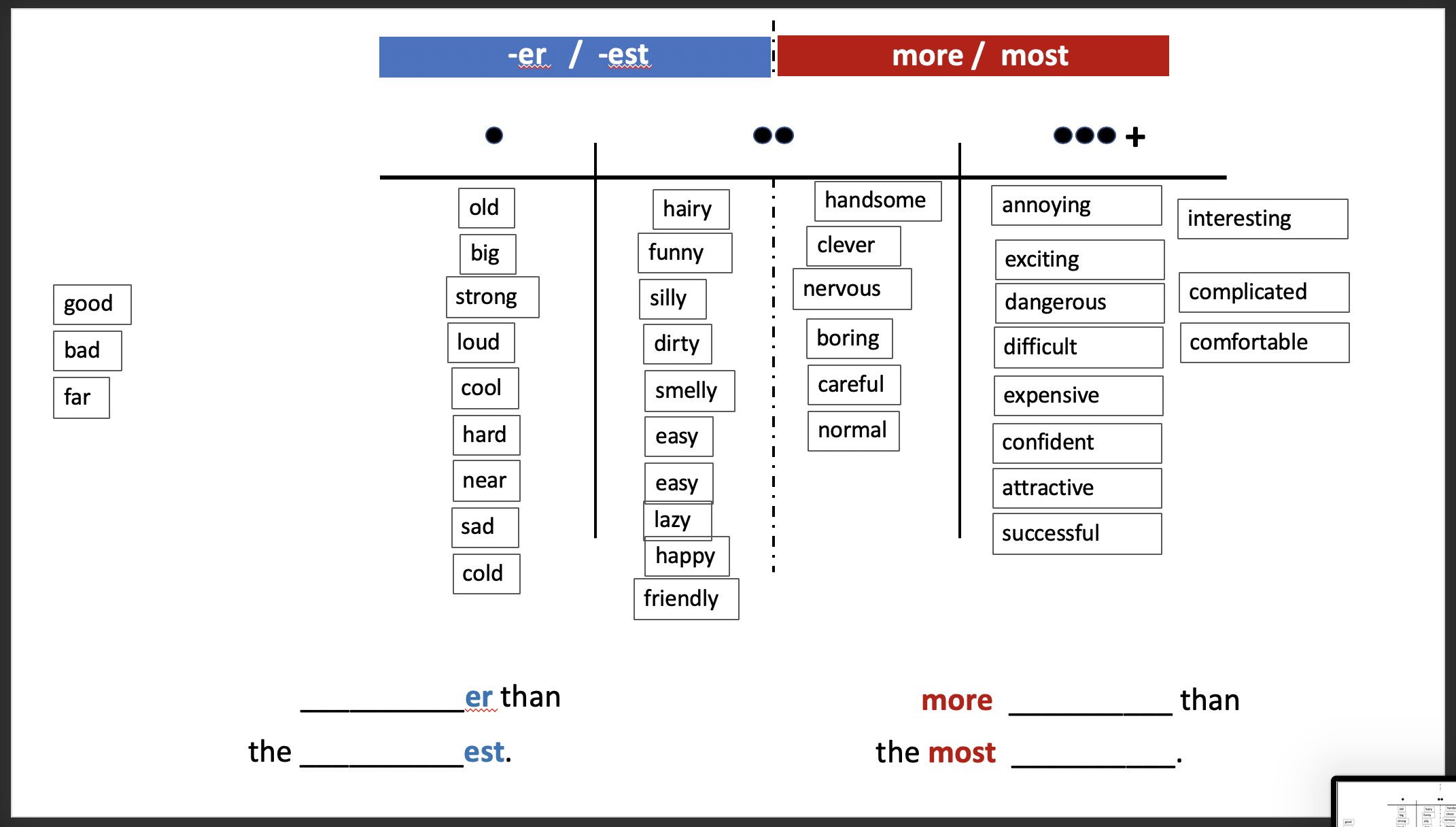
5. Ask for three volunteers to stand up. Then select a word like ‘cool’. Ask the class “who is the coolest?” – mime striking a cool pose if that helps. Elicit full sentences using both cooler and coolest. Continue with other students using a range of words to emphasise things like doubling the consonant (sad – sadder – saddest), and ‘y’ changing to ‘i’ (lazy – lazier – laziest). [NOTE: as an alternative, you can use celebrities to compare instead]

Rationale: Students enjoy dynamic nature of volunteers standing up and moving around a little. Drills the structure.

.

6. If a student hasn’t asked already, this is a good time to bring in the irregulars. Ask why they are separated. Elicit the correct comparative and superlative forms (good/better/best; bad/worse/worst; far/further/furthest). NOTE: you can decide if you want to add the farther/farthest alternatives, or indeed explain the option of old/elder/ eldest.

.

7. If time allows, or students complete the lesson quickly, end the lesson by practising with a Comparative/Superlative Kahoot. For example:
https://create.kahoot.it/details/91d874ad-36e2-4f6b-b3c7-f2bc2ae23faf .

NOTE: this lesson intentionally simplifies comparative/superlative options available for two syllable words. (e.g. words like quiet that can use both -er/-est and more/most forms). It is meant to offer a working rule that will help students avoid jarring errors.

Body Parts

Lesson aims:
To practise body part vocabulary and guessing phrases – e.g. “I think it’s a nose.” and “It could be a finger.”

Quick description: The lesson begins with a warmer game of guess the body part. Students then try to list as many body parts as they can. Sharing and comparing with neighbours they expand their vocabulary. The class is then divided into two teams, with each team attempting to list, then label the most body parts on a giant outline of a body. (Note: all images used are royalty free – from Pexels.com)

Sub-aims: practise using the correct indefinite article (“a” or “an”)

Teaching Materials / requirements:

• Power point presentation
• slips of paper (for body part lists)
• A projector 
• A white board (or blackboard) onto which a body outline can be drawn and labelled
• two different coloured whiteboard markers (or chalks) – this plan uses blue and green.
• Optional: masking tape (to draw a ‘do not cross’ line)
DOWNLOAD LINKS: word doc of lesson plan powerpoint template

Preparation:

  • If no white board is available, consider preparing a body outline on sheets of clear plastic (see Tips: Useful materials page) that can be stuck up on a side wall

Assumed knowledge:

Students will already have been introduced to body parts in the past, but may have forgotten some/all of this.

Anticipated problems > solutions:

  1. Technology fail > solution > if there is a risk of technology fail, the images in the body part guessing game could be printed out as colour worksheets to be shared in groups.
  2. The body-labelling segment of the game can get chaotic as the class gets excited/competetive > solution > ensure rules are set clearly before the game and create a ‘do not cross’ line, beyond which only one team member is allowed at any one time.

Lesson plan and rationale:

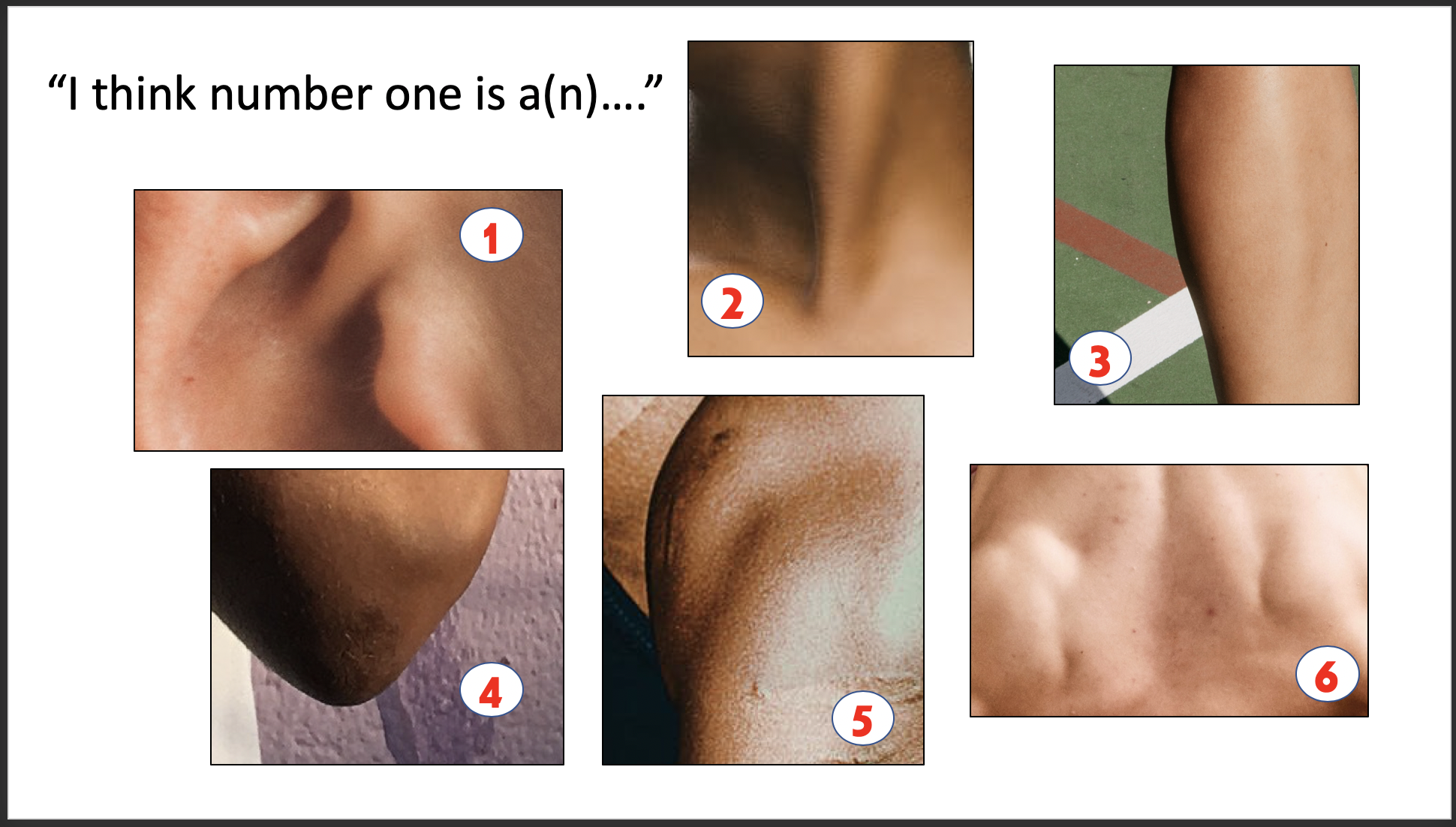
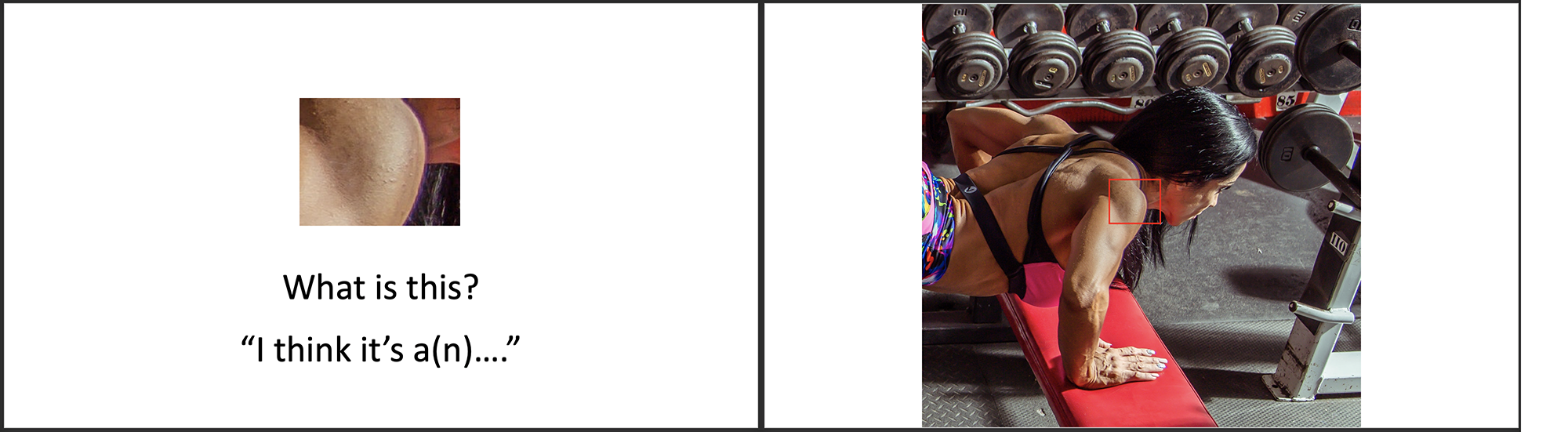
1. Without revealing the theme of the lesson, put up the first slide (showing an extreme close-up of a shoulder) and ask them “What is this?”. Ask for suggestions, encourage the use of a full sentence starting “I think it’s a(n)…”. If you get a quick correct guess, let the guessing continue so that the class can practice speaking a little.

Rationale: Builds interest in the lesson and warms up the class. A good opportunity to practise the correct use of ‘a’ and ‘an’

.

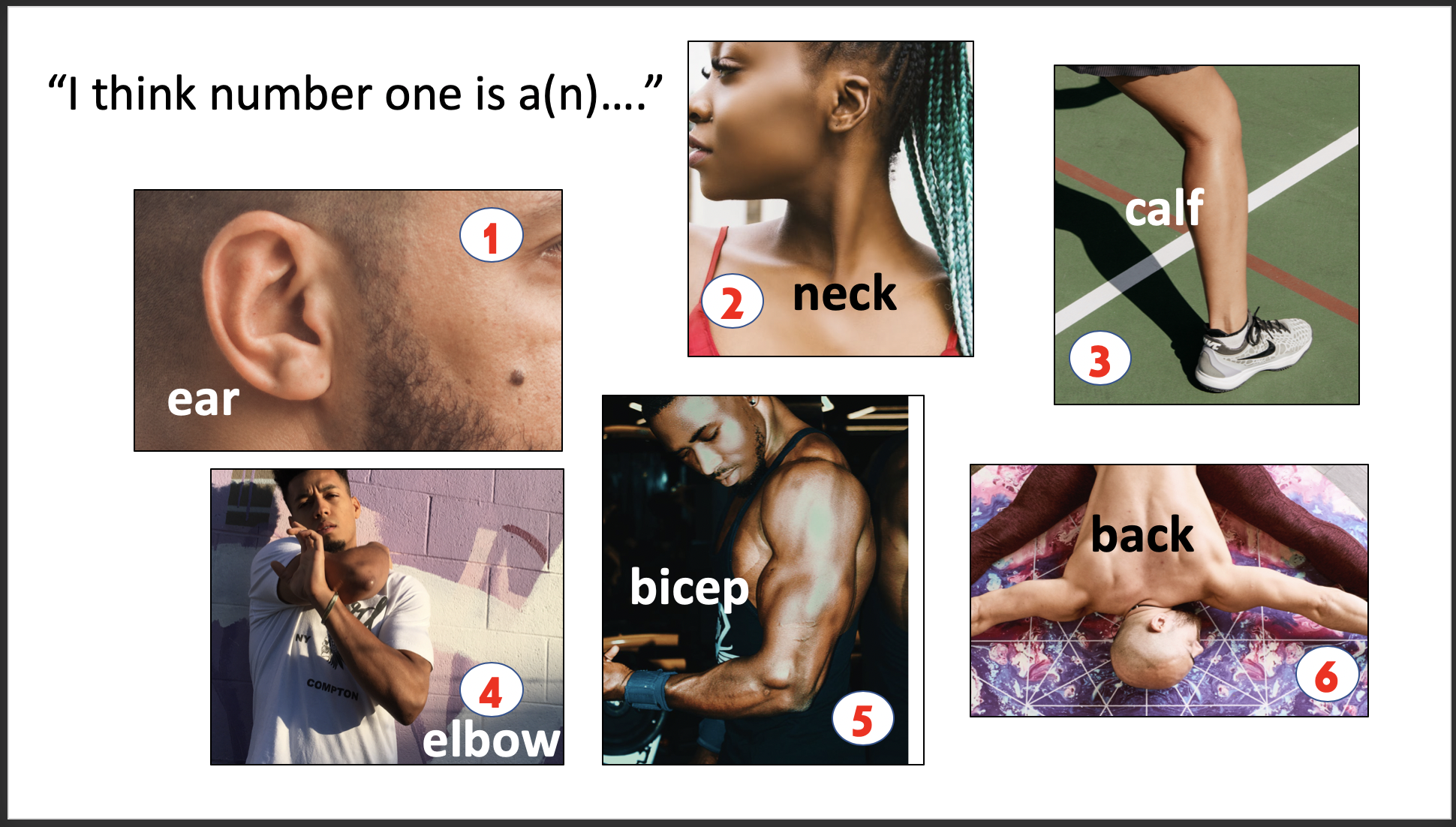
2. Reveal the correct answer. Tell the class you will be talking about body parts. Show the next slide and instruct the class to identify the pictures. Students should work in pairs and talk in English, using example phrases such as: “I think number one is a hand.” / “I agree.” / “No, I think it’s a foot.”

Rationale: Gives students some speaking practice. By working in. pairs allows students to share knowledge of body parts and strengthen each other’s vocabulary .

.

3. When most of the class have finished ask them to compare their ideas with their neighbouring pairs. Then take feedback as a class. Insist on full sentences (e.g.” I think number 1 is….”). Put all answers to the group with a “Do you agree?” Reveal the correct answers.

Rationale: Allowing students to check with neighbours builds confidence before class feedback. Class feedback helps drill “I think…” opinions and “Do you agree?” confirmation statements.

.

4. Next ask each student to list as many body parts as possible. (Consider handing out slips of paper to encourage participation).Make it a competition: set a ‘time limit’ of 5 minutes (although this can be extended quietly to allow students more time). Go around the room checking lists. After 5 minutes, ask how many each student has. Ask students to compare with their neighbours.

Rationale: Allowing students to check with neighbours builds confidence before class feedback and strengthens all students vocabulary before the next labelling exercise. .

5. Take class feedback. Ask students who has the most and get that student to read out their list. Write each word on the board. Concept check by asking a student to “Point to your elbow, please.” Once the list is complete ask for any extra body parts that haven’t been listed yet. NOTE: highlight singular/plural of foot/feet and tooth/teeth.

Rationale: Consolidates body part language. Allows students to see correct spelling and to visualise words (important for more visual learners) .

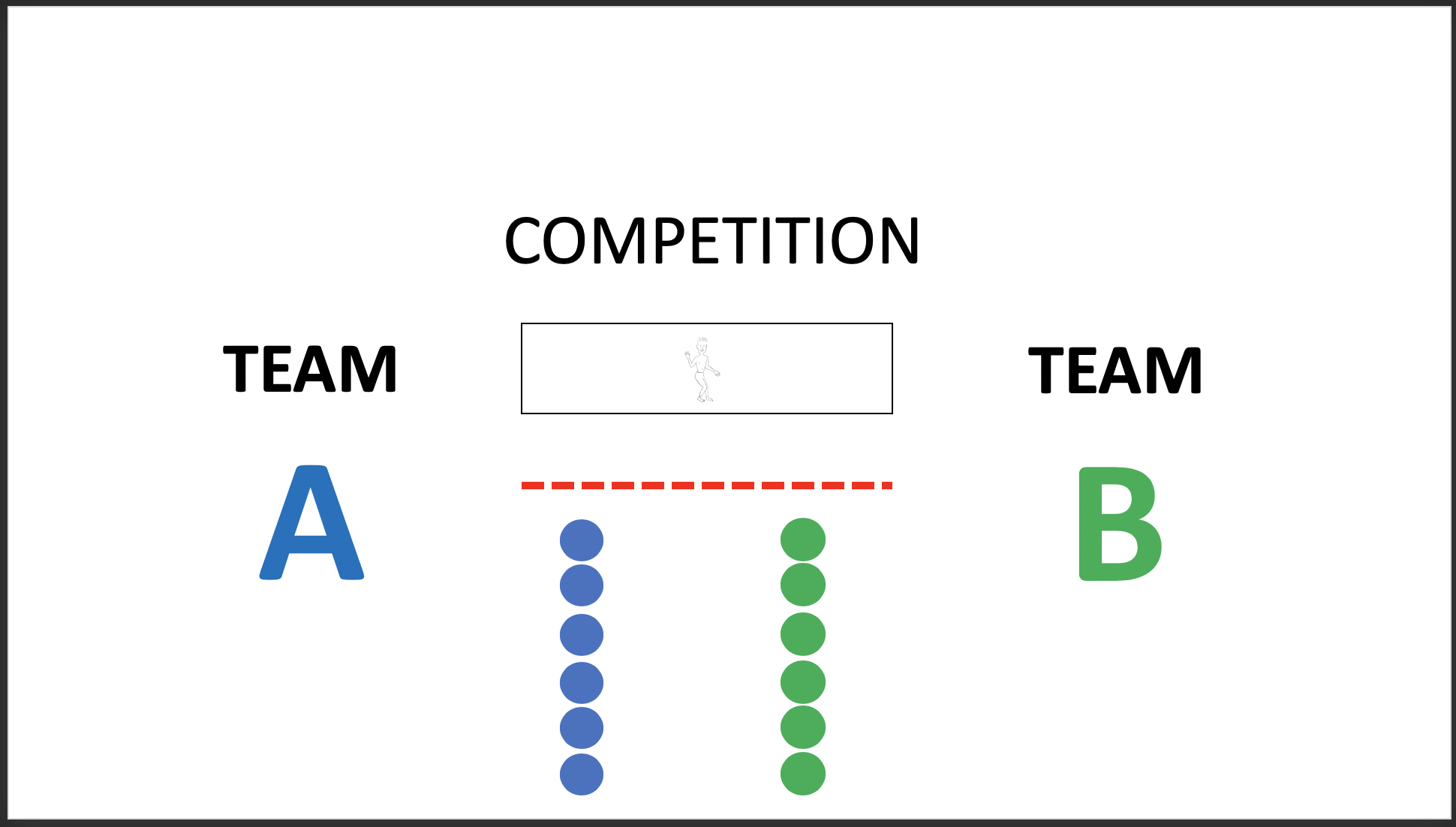
6. Next go around the class giving each student a letter A or B. Put a ‘do not cross’ line of masking tape on the floor, one metre from the whiteboard. Ask A’s to stand up then form a line facing the board. Do the same with B’s. Show the diagram on the powerpoint slide. Point to the board and its equivalent on the diagram.Point to the coloured dots then to students in that team to indicate the dots represent students “You are team A. You are Blue.” hold up the blue whiteboard marker. Repeat with team B and Green. Point to the ‘do not cross’ line. Explain only one student is allowed in front of this line. Students must label the body outline with one part of the body, then pass the pen to the next teammate and return to the back of the queue. There can be no repetition of body parts. Any cheating (rubbing out competitors answers) is a 1 point penalty.

Rationale: The competitive nature of the game encourages teammates to help each other and learn vocabulary.

.

6. Progress to next slide of body outline (or draw your own). The game ends when no more guesses can be added. The class returns to its seats and the body parts are checked and corrected where necessary. The tally is totted up and a winning team is declared. NOTE: the unusual stance adopted in the outline drawing is to allow students to identify and label the persons back / bottom. Also – depending on the students, it’s possible someone will try to label the groin area using inappropriate language. Discuss with your teacher how you should deal with this and prepare your response in advance.

.

7. The lesson can continue with a practical exercise from the workbook or, working on verbs such as stand, put, touch, sit, lie, face down, face up, turn (90 degree). etc This can then lead on to an exercise about describing yoga positions/ reproducing poses from famous painting etc..

SPANISH BUILDINGS (passive and active voice)

Lesson aims:
Students learn how to construct passive sentences and get an understanding for how they compare to active sentences.

Quick description: Using facts about iconic Spanish buildings, students learn how to construct passive sentence. Students first identify the Spanish buildings and get some conversation practice as they discuss their knowledge of these buildings – first in pairs, then as a class. Student then see an example fact in the active voice and see how it can be converted into the passive voice. Following this example, they fill the blanks to complete further facts about the buildings pictured. Finally they convert the passive sentences into the active voice. (In doing so, highlighting how the passive is useful when we don’t know the who has done an action, or we don’t want to say, or it isn’t important.)

Sub-skills practised:  quick practice of present continuous (I have never visited the Sagrada Familia / I have visited it twice etc), conversation practice -giving opinions (I like it because… etc).

Teaching Materials / requirements:

• Power point presentation • Power point presentation 
• A projector
• list of additional facts (in active) for fast finishers to convert to passive
DOWNLOAD LINKS: word doc of lesson plan • powerpoint template  youtube video of presentation

Preparation:

  • Make a note of / print out extra facts (in active voice) for fast finishers.

Assumed knowledge:

Students have some knowledge of the past tense (for discussions of the buildings pictured). Knowledge of the present simple structure of subject – verb – object.

Anticipated problems > solutions:

  1. Technology fail – For the initial stages, if there is no projector, the students might enjoy your attempts to draw the buildings on the board yourself! Or ask a good student to come up and show google search images of the buildings on your phone for them to try to draw.

Lesson plan and rationale:

Watch this video of the full lesson:

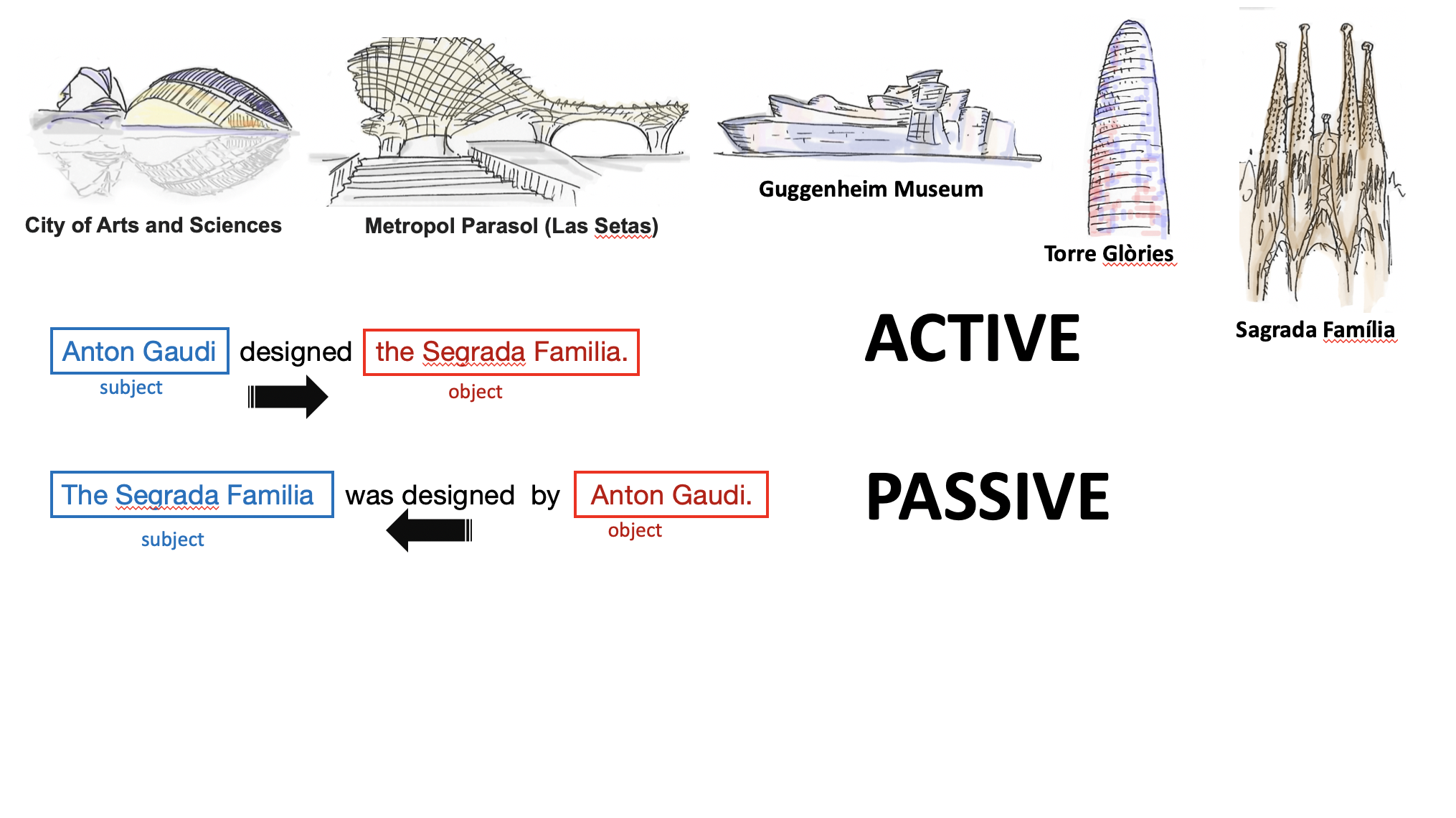
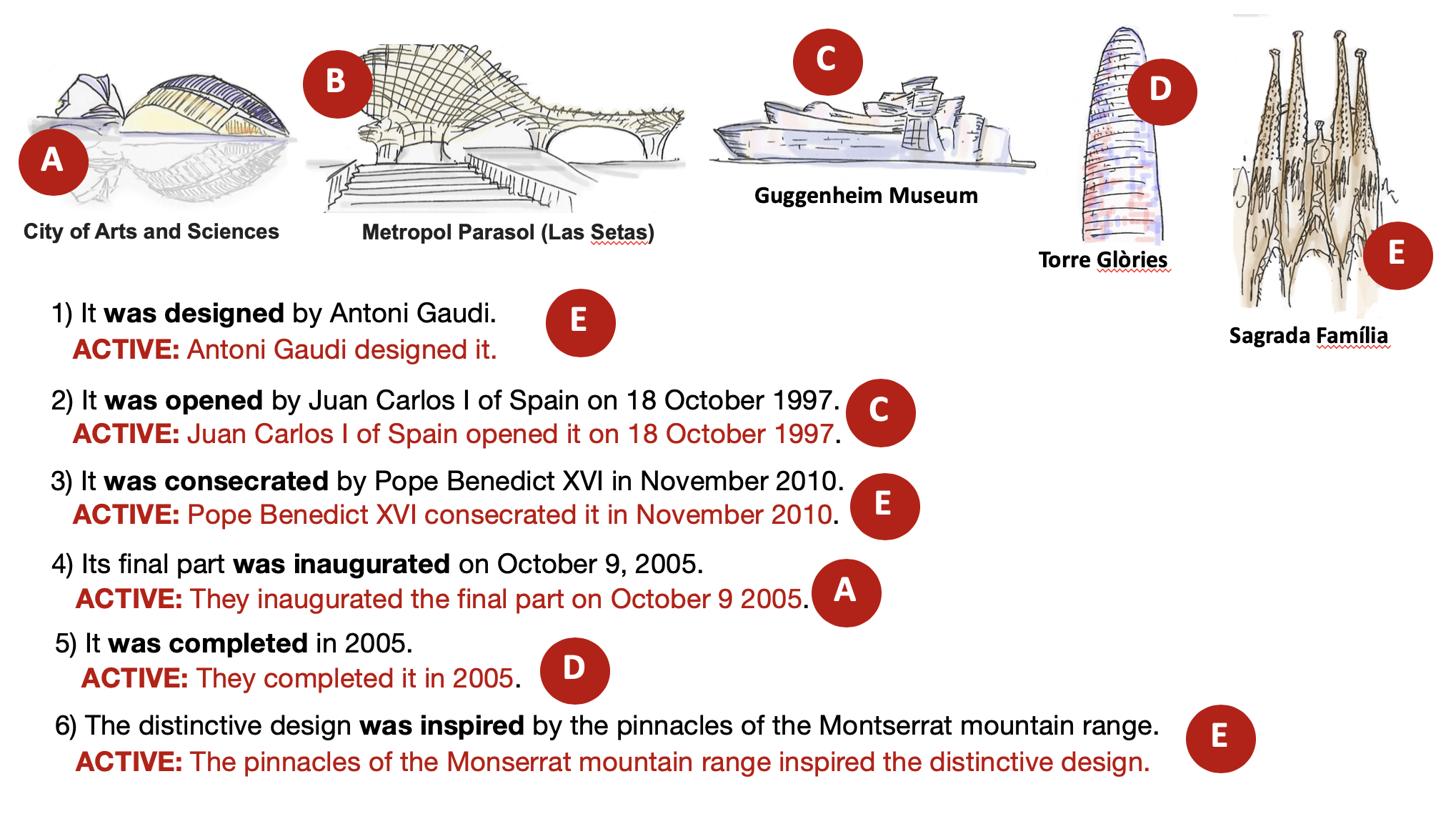
1. Start the powerpoint presentation. Ask the question: “What is the connection between these pictures?” With each slide progression, more of the five iconic Spanish building are gradually revealed. (Buildings are [a]City of Arts and Sciences in Valencia [b]Metropol Parasol (a.k.a. Las Setas) in Sevilla [c]Guggenheim Museum in Bilbao [d]Torre Glòries in Barcelona and [e]Sagrada Família also in Barcelona.)

Rationale: This activates students’ schema (their background knowledge of the lesson topic) and building intrigue and interest in what the lesson will be about.

2. Students can shout out throughout the reveal process, but try to push for the more specific ‘Spanish buildings’ – or even ‘iconic Spanish buildings’ – (rather than just. ‘buildings’). Once the connection is made, ask the students as a class which of these buildings they recognise. (NOTE: many students don’t know Las Setas – and may argue that it is not ‘iconic’ – use this as an opportunity to spark debate about “What building would you include?” Reveal the locations of each building and set up conversation practice. Put class into pairs or groups and ask them to discuss the three questions. (“Ask your partner…” is better than “Tell your partner…” as it will encourage them to listen to each other.)
Ask your partner(s):
– Which of these building have you visited?
 – What do you know about these buildings?
– What is your opinion about these buildings?

Rationale: This gives students a chance to have some conversation practice and activates useful vocabulary about buildings and appearance.

.

3. Class feedback: choose student to say which of the buildings their partners have visited. Then ask that partner if they liked it and why. Ask the whole class to offer any facts about the buildings..

Rationale: Taking feedback from students gives purpose to their conversation practice. It also sets up for the next stage of the lesson, where they will discuss facts about the buildings.

4. After taking feedback, tell the class that you know the architects that designed these buildings. Reveal each one (and be open to further comments from students about each). As you reveal each, ensure you (casually) use the passive voice – e.g “The Sagrada Familia was designed by Antoni Gaudi.”

Rationale: Embeds the example of the passive voice in the students minds through repetition.

5. Talk through the next slide and introduce the sentence “Antoni Gaudi designed the Sagrada Familia”. Ask them to identify Antoni Gaudi [as the subject] and the Sagrada Familia [as the object]. Point out that – in the active voice – the subject is ‘doing’ the verb to the object.
Point out that you used a different sentences to describe this – see if they remember it. If not introduce the passive sentence “The sagrada Familia was designed by Antoni Gaudi.” Concept check by asking if the two sentences mean the same thing. [They do.] Again ask students to identify the subject and the object. Point out that this time, the verb is happening to the subject.

Rationale: Highlights the difference between the active and the passive voice.

.

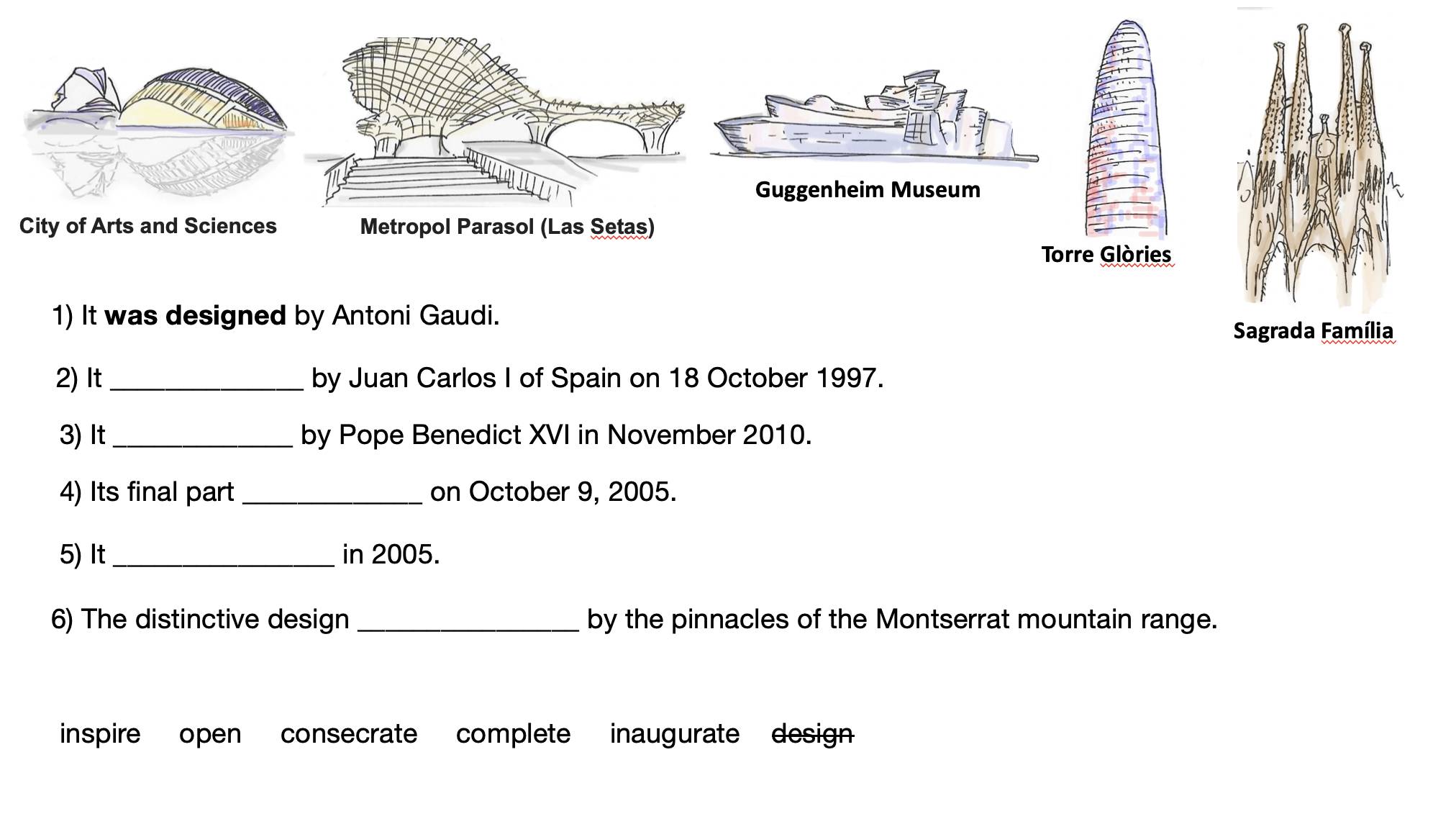
6. Move to the next slide. Tell the students that this slide contains facts about some of the buildings. Tell them they are going to complete the sentences in the passive voice. Complete number 1 together (it’s the same as the previous slide). Next quickly check that students know the definitions of the verbs at the bottom of the slide. These verbs are to be used to complete the sentences in the passive.
For any students that finish early, write two extra gap fill questions on the board (but without the missing verb).

Rationale: Students begin to practise forming the passive using the example as a template..

.

7. Ask students to compare with their neighbours before taking feedback from the class together – completing the powerpoint as you go.
When all the sentences have been completed, go through each asking students to identify the subject and object in each sentence.

Rationale: This highlights that the passive voice doesn’t necessarily need an object..

.

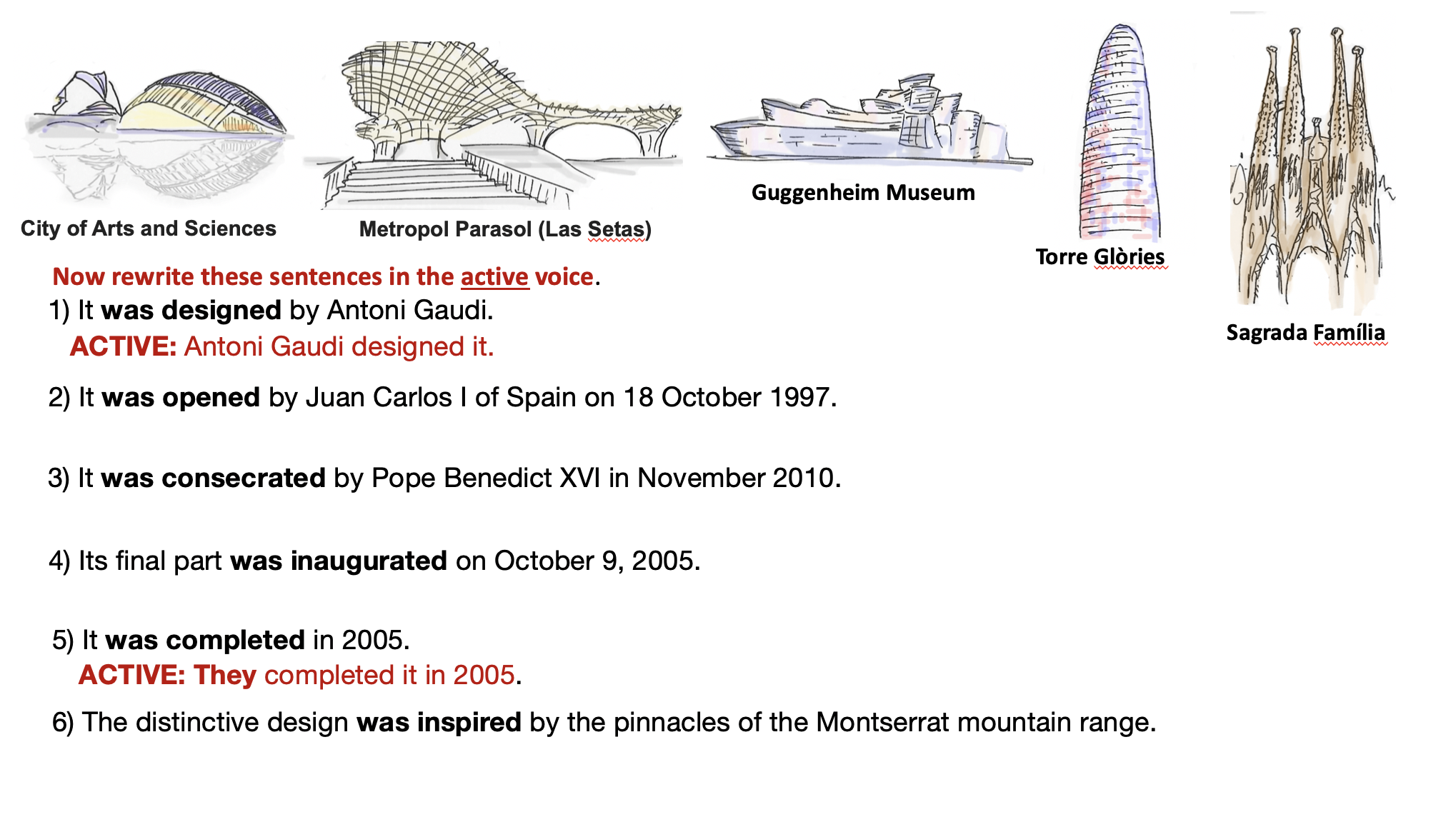
8. Next tell students they are going to convert the sentences into the active voice. Do two examples together as a class – 1 and 5:
1) It was designed by Antoni Gaudi. –becomes–> Antoni Gaudi designed it.
5) It was completed in 2005. –becomes–> ???? completed it in 2005.

Try to elicit who ‘completed it’. (The answer is we don’t know – ‘someone’ did.) Say that in English we usually say ‘They completed it in 2005.’ Use this as an opportunity to highlight that the passive is useful when:
– we don’t know who did something
– it’s not important who did something

Highlight that the passive is useful for formal descriptions.

Rationale: This emphasises the reasons for using the passive..

.

9. Ask students to rewrite the rest of the sentences in the active voice. As students finish, ask them to compare with their neighbours. Finally take feedback from the whole class and reveal he answers on the board.

Rationale: By converting the sentences from passive to active, students have a chance to ‘lock in’ the differences between the two.

10. With any remaining time, ask students to discuss which facts they think relate to which building. They can guess, or use English language wikipedia, if computers are available.

Rationale: Finishes the lesson with an opportunity for further conversation. If using Wikipedia, students will see that the passive is used a great deal.

.

11. At the end of the lesson, display the short-url and QR code that links to a youtube video of the lesson. Invite them to view this in their free time if they wish.

Rationale: Using this, students can review the lesson in their own time to consolidate what they have learnt, or clarify points they may have missed.

.

TIPS: Maximising teacher conversation classes

For two hours of your weekly teaching schedule, your school can timetable you in to give classes to the teaching staff (and indeed anyone in the school who would benefit from improved English language skills). While this could potentially feel awkward for the teaching Auxiliar, I’ve found them the most fun and rewarding. This is largely because your students are arguably the most motivated an invested you’ll have – by virtue of having opted in to the classes. The smaller class size also makes them much more manageable, flexible and with more scope to react to the needs of each ‘student’.

My teacher-students we’re keen to use the time for conversation practice, so I usually devise very loose lessons that enabled this. Often its a theme that lends itself to a particular grammar point. And if I identify a problem area (grammatically) I can search for exercises to help and maybe focus on that again in the subsequent classes.

Perhaps best of all, the ‘opt-in’, collegial nature of these classes enabled me to set up an email group to which I send summaries of the lesson, with more in-depth explanations, links to useful Youtube videos, further practices exercises etc. This has given the lessons a more substantive feel than they otherwise may have had – and allows busy teachers (who may have had to skip a class) a chance to stay involved and perhaps consolidate in their own time.

During each class, I write up verbs, phrases, vocabulary etc on the board. At the end of the lesson, I take a photo with my phone and use this as the basis for my follow up email. Below is an sample of the emails I have produced.

Lesson One

Hi everyone!

(Hay una version español abajo 😉
It was great to met you all last week. Here is a summary of the lesson. (I’m going to send an email like this each week.) If you have any questions during the week you can contact me via this email address or via WhatsApp (+44 78xxxxxxxx). Equally, if there is anything particular you would like to work on during our lesson, let me know. 🙂

Fue genial conoceros la semana pasada. Aquí hay un resumen de la clase. (Voy a enviar un correo electrónico como este cada semana). Si tengáis  alguna pregunta durante la semana, podéis avisarme por esta dirección de correo electrónico o por WhatsApp (+44 78xxxxxxxx). Igualmente, si hay algo en particular que os gustaría tocar/cubrir (?)  durante nuestras clases, avísame también. 🙂

Introducing yourself. 
(No os preocupáis mucho por las palabras entre paréntesis – solo están allí para anadir información/ explicación )
Hi. My name is Pete. I’m 41 years old.      (I have 41 years)
I’m from Manchester, but I was born in Carlisle.
I moved to Manchester in 2002.     (past simple – ‘I moved’)
I live in Manchester.
(we use present simple – ‘I live’ – for permanent facts)
I’m living in Madrid until the end of June. 
– (we use present continuous – ‘I am living’ – for temporary situations)
I’m a writer, but right now I’m working as a teaching assistant.
I’m single.   ( / married / divorced / engaged / retired ). 
In my free time I play the piano and go running. 
(we use present simple – ‘I play’ and ‘ I go’ – for habits and routines)
My favourite country is Japan. I have visited Tokyo 3 times. 
(we use present perfect – ‘I have visited’ – to talk about a period of time that continues from the past up to now)

verbs
to be born – nacerto live – vivirto be – ser /estarto study – estudiarto move – mudarseto have – tenerto work – trabajarto visit – visitarto play – tocar

Remember:
X  What do you study? X > What are you studying?
X Where have you born? X > Where were you born?
X I don’t visit New York. X > I have never visited New York.
2019 can be pronounced “two-thousand and nineteen” or “twenty-nineteen”.

See you all on Wednesday!
Best regards,
Pete

Lesson Two

.

Hi everyone!
Here is a reminder of what we covered in our last lesson.

The future
Cuando hablas sobre el futuro, hay varias formas de frases que puedas usar. Me parece que sabéis la forma will + INFINTIVE 
e.g. Tomorrow I will make a cake for Pete’s birthday. 
(Mañana haré una tarta para el cumpleaños de Pete.)

Pero de hecho, es mas seguro usar la forma to be + going to + INFINITIVE
e.g. Next week I am going to visit a museum.
(La semana que viene, voy a visitar un museo.)

Recuerda que tienes que conjugar ‘to be’ en el present simple:
am going to visit a museum.
You are going to visit a museum.
He is going to visit a museum.
We are going to visit a museum.
They are going to visit a museum.

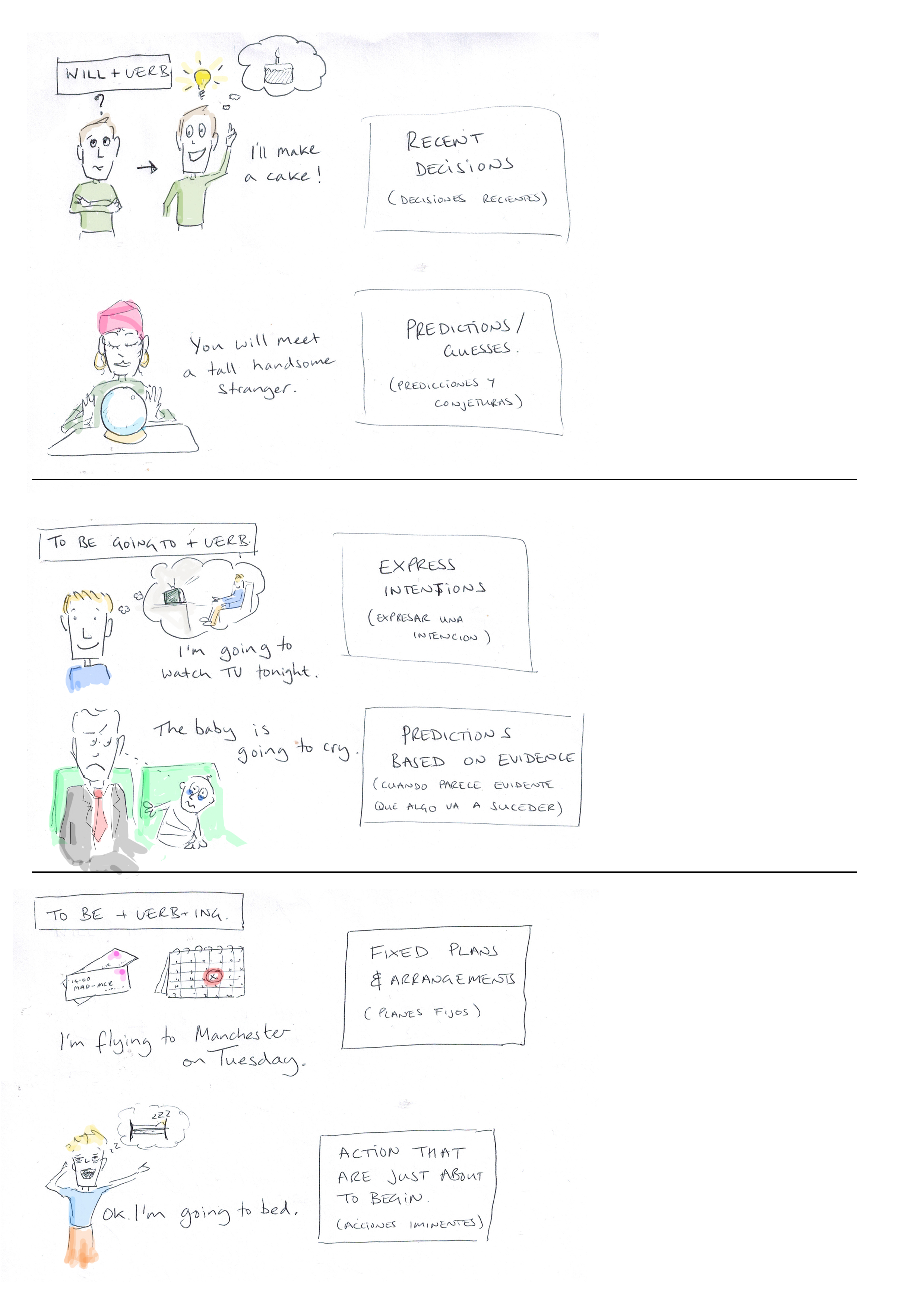
El dibujo ajunto explica la diferencia entre las dos formas.

.
(Img: Pete Brewis)

Verbs
to get on – llevarse bien
to be born – nacer
to dress up – disfrazarse 
to borrow – pedir prestar
to lend – prestar

Phrases and vocabulary
I’m coming! – ¡Ya voy!
How’s your week going? –  ¿Cómo va tu semana?
(It’s) your turn – te toca 
She lives on her own – vive solo
I live on my own – vivo solo
(tennis / squash / badminton / basketball / padel) court – pista 
(football / hockey / rugby) pitch – campo
a view – una vista
a viewpoint / lookout – un mirador
go cycling
go swimming
go running
go shopping
a costume – un disfraz

See you on Wednesday!
Pete

Lesson Three

Hi,
Here is a recap of the last two lessons. Please forward on this email to anyone else in the group who might want it.If you would like to receive this email directly, please send me your direct/personal email address.{Aquí hay un resumen de las últimas dos clases. Por favor, reenvíe este correo electrónico a cualquier otra persona del grupo que no haya recibido.Si desea recibir este correo electrónico directamente, envíeme su dirección de correo electrónico directa / personal.}

THE FUTURE:
will + VERB
– recent decision
(e.g. ” I’ll make a cake for Pete.”)

– predictions / guesses (with no evidence).
(e.g. “In the year 3000, everyone will own flying cars.”)

[am / are / is] + going to + VERB
– express intentions
(e.g. “I’m going to watch TV tonight.”)
– predictions based on evidence
(e.g. “Look at those black clouds! It‘s going to rain“)

[am / are / is] + VERB+ing  (the future using present continuous)
– to talk about fixed arrangements/plans with other people.
(e.g. “I can’t come to your party on Saturday; I‘m visiting my friend in Malaga.”)

– to talk about something that is about to start imminently
(e.g. “I‘m going to bed. Goodnight!”) 

Verbs
to think up – inventar
to slide – deslizarse
to campaign – hacer campaña

irregular verbs
(verb – past simple – past participle)
slide – slid – slid
eat – ate – eaten
sleep – slept – slept
think – thought – thought
read – read* – read*  (pronounced “red”)
sing – sang – sung

Phrases and vocabulary 
My phone is on ‘silent’
My phone is on ‘vibrate’
a recital – recital / recitación 
a talk – una charlacostal road
I live near of the school  (puedes decir “near to the school” también, pero es menos común)
poverty – la pobrezaski
slope – la pista de esquí

See you tomorrow!
Pete

Lesson Six

Hi everyone,

Last lesson we practised the past simple… including the correct pronunciation.

PAST SIMPLE:
regular verbs: 
VERB+ed
e.g. “I jumped into the pool.”
Remember:
• y -> i  (e.g. hurry -> hurried )
• Consonant-vowel-consonant => double the last letter  (e.g. stop -> stopped)

irregular verbs: 
e.g. “I drove my car into a tree.”  (The past simple of the verb ‘to drive’.)  

pronunciation
For regular verbs, the ‘ed‘ ending is pronounced in three different ways.

‘ed’ is pronounced  / t /  for unvoiced sounds (sonidos sin voz):e.g.washed, talked, watched

‘ed’ is pronounced / d / for voiced sounds (sonidos con voz)e.g lived, played, cried

‘ed’ is pronounced / id / for verbs that end in a t or d sound (terminan con el sonido ‘t’ o ‘d’ )e.g. hated, wanted, added. (Notad: no es que la palabra termine con la letra ‘t’ o ‘d’ – mejor dicho que tenga el sonido de ‘t’ o ‘d’. Por ejemplo, el verbo “hate” termina con ‘e’, pero el sonido es ‘t’)

A mi, los sonidos / t / y / d / son muy similar. Lo mas importante es que estos dos no tienen una sílaba. (Pero con la terminación / id /, se ánade una sílaba).

A 3 minute video explanation in English:
https://youtu.be/-QEFgKIyy_Y

A video explanation in Spanish (empieza 3m05s):
https://youtu.be/2wdHinJh8no?t=176


Phrases and vocabulary 

a nephew – sobrinoa niece – sobrina (no existe una palabra ‘sobrinos’ en ingles!)a nap – cabazadanod off – cabecar
during [something] – e.g. “I slept during the movie.” for [a length of time] – e.g.”I slept for 30 minutes.” sign up (for something) – e.g. “I’ve signed up for yoga lessons”Queen Elizabeth II  = “Queen Elizabeth the second”to lie – mentirmark / grade – calificar / corregir 


Irregular verbs 
send – sent
be – was
swim – swam
freeze – froze
sleep – slept
do – did

That’s everything!

See you tomorrow. 🙂
Pete.

)

[5] Big plastic folders

This is more for you than the students. If you plan to get creative and use lots of materials with ‘bits’, then do yourself a favour and buy a stack of plastic wallet folders. The ones pictured are ideal – big enough to hold the wipe-clean album boards (see number 1) and with a button clip to keep it falling out all over the place. (I originally would put things in plastic ring binder wallet and would arrive in class to find them tipped all over the inside of my bag.)

TIPS: Top 5 super-useful classroom materials

Over the last year and a half of teaching as an Auxiliar I’ve built a kit of useful bits – found in any local Chinese bazaar – that have aided and enhanced my classroom activities here in Spain. From bolstering limited whiteboard space to adding an interactive element to activities, they make lesson a little easier for the teacher and a little more stimulating for the students.

[1] Wipe-clean boards

These are the old sticky laminated pages that used to be used in photo albums (remember those?). These have so many uses.

  • give them to students with a fine whiteboard marker (also available in bazaar shops) for team brainstorming or to write down team answer in a quiz.
  • stick a worksheet inside the board (under the plastic laminate) to create a re-usable sheet that students can write on with their whiteboard markers
  • stick on cards in kinaesthetic exercises. Some more ‘excitable’ students can sabotage rival teams by blowing away paper cards being rearranged on a table. Blutac them to a board first to stop this happening (and prevent little bits of your game being lost!)
  • prepare blutac blobs – don’t lose valuable attention time by trying to get a blutac blob that you need to stick something up on the board. Have a load of them read to use on one board.
  • protect delicate visual aids by sticking them to the boards while transporting

[2] Rolls of plastic

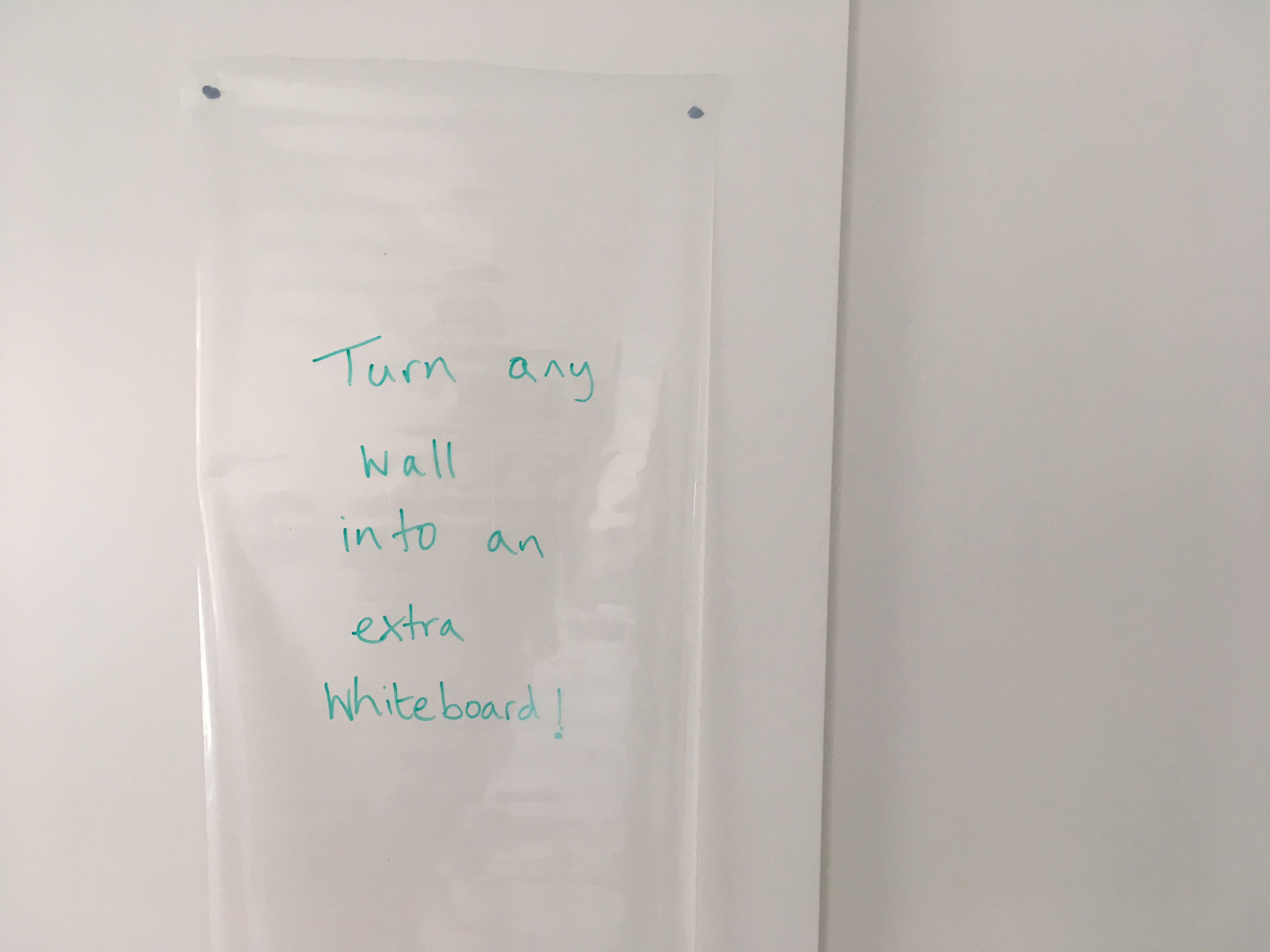
In some classrooms you have a choice of either the whiteboard or the roll down projector screen. Perhaps at times you want to project your powerpoint display onto the board, but also add notes at the same time. A roll of transparent plastic (actually intended to be used to protect book covers) makes an excellent side whiteboard. (Note: you have to be sure there is no light reflections that make it difficult to read.)
Last year, I found it particularly useful for:

  • creating extra ‘whiteboard’ space
  • pre-writing whiteboard material (where projectors were not available)
  • create a permanent resource by drawing images in permanent marker on one side (eg body outline) that students can then label (on the reverse) with whiteboard markers.
  • change the dynamic of a classroom by turning a side wall or back wall into a whiteboard

[3] Soft ball

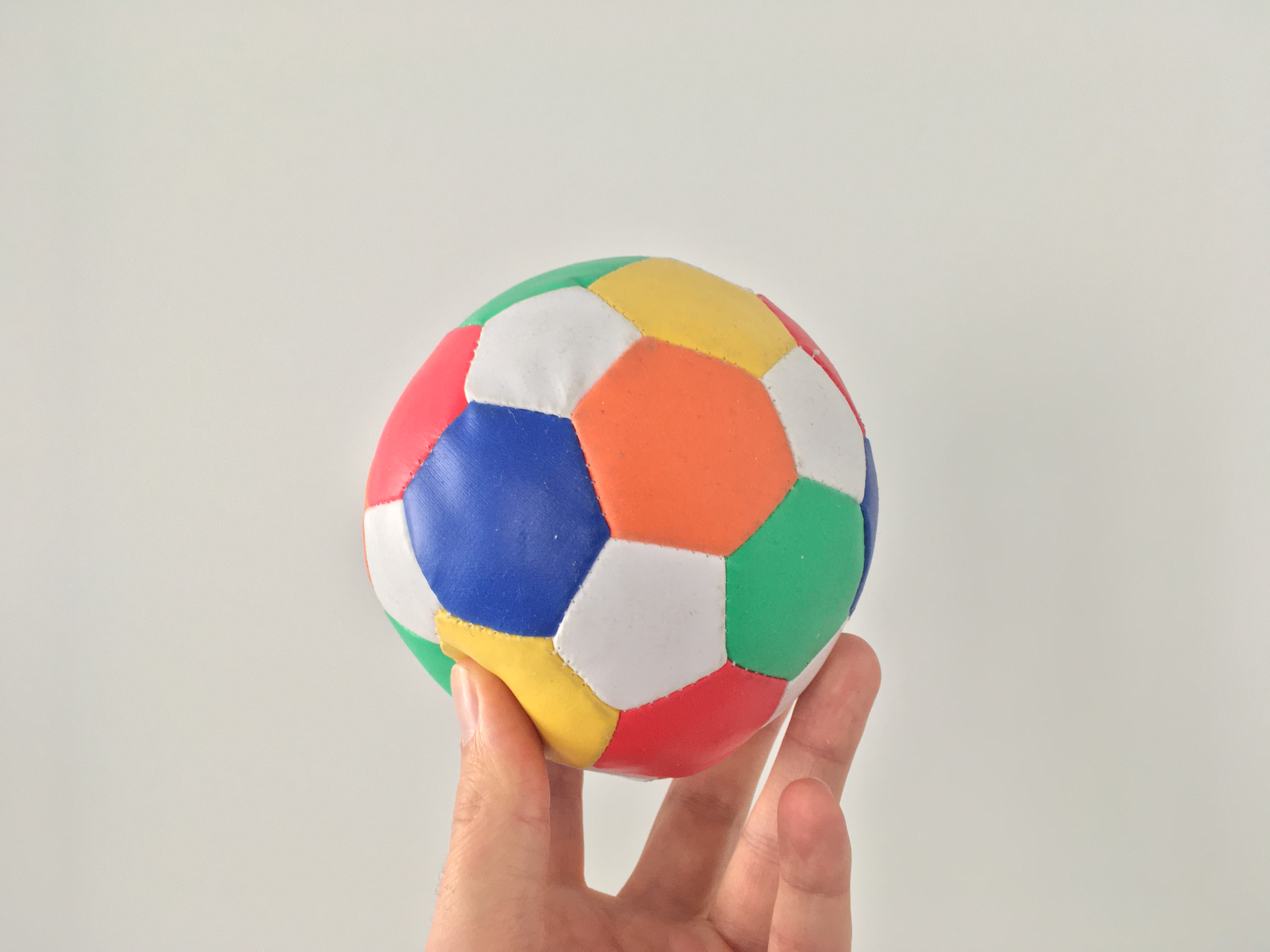
This is an obvious one, but having a cheap soft ball stuffed in your bag is a great idea. In activities where the students have to give feedback – or even ask each other questions in a chain – a ball can give the whole thing a bit more energy. I found this particularly good for sport or ‘laddish’ classes, who were reluctant to take part. Classmates would give their friends difficult throws to catch – giving them just the right level of rebellious free-will in a lesson that might otherwise have turned them off.

[4] Dice

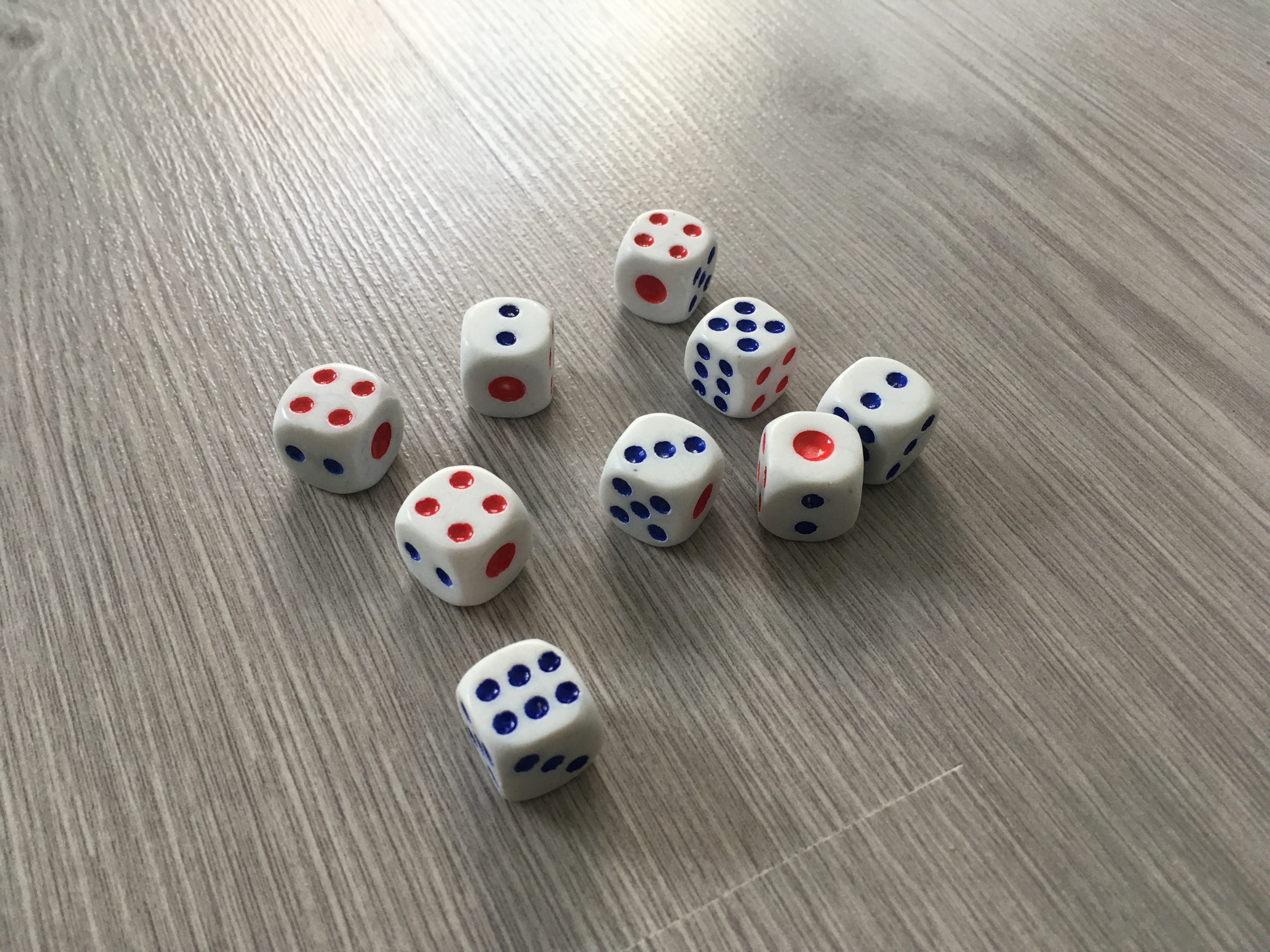
Another obvious one, perhaps, but at times finding a set of dice in a school or college can be tricky when you’re rushing to your next lesson. But they are not just useful for games – any practice or feedback session can be ‘game-ified’ by numbering activities and asking students to roll the dice. (Eg – label questions one to twelve on the board and a student rolls the dice to see which one they have to answer in feedback. Or in groups, practise present continuous where 1 = I, 2=you, 3= he etc. )

[5] Big plastic folders

This is more for you than the students. If you plan to get creative and use lots of materials with ‘bits’, then do yourself a favour and buy a stack of plastic wallet folders. The ones pictured are ideal – big enough to hold the wipe-clean album boards (see number 1) and with a button clip to keep it falling out all over the place. (I originally would put things in plastic ring binder wallet and would arrive in class to find them tipped all over the inside of my bag.)

What’s in the box? (Q and short A practice)

Lesson aims:

To practise question asking (e.g. “Can it/Can you..?”, “Is it…?”, “Does it..?”) and also encourage appropriate short answers (e.g. “Yes, it can/No, it can’t”, “Yes, it is/No, it isn’t” etc)

Quick description: This is an elongated version of the classic yes/no warm-up game. A powerpoint slide shows a closed box. Students have to ask questions to guess what’s inside. When they guess correctly, the slide changes to reveal a realistic interior and an image of that object.

NOTE: • Once the idea is introduced, it can be a good occasional lesson warmer – with the 2nd or 3rd object leading in to your topic (eg a mobile phone, to start a lesson practicing phone conversations.) • This lesson works best if after introducing the idea in one lesson, you take their suggests and create a powerpoint for the following lesson.

Sub-skills practised:  Building vocabulary knowledge of materials (eg made of glass, wood, steel etc) and verbs (can it fly, float). Practise comparatives -e.g. “it it bigger than my hand?” etc.

Teaching Materials / requirements:

• Power point presentation (prepared with students’ suggestions if applicable)
• slips of paper (so students can suggest objects for future classes)
• A projector (with picture ‘freeze’ or ‘hide’ function)
• A white board – or a roll of book covering plastic to act as a blutac-up-able whiteboard.
DOWNLOAD LINKS: word doc of lesson plan powerpoint template

Preparation:

  • Pre-load the powerpoint slides using free images from the internet (eg Plexel).
  • To save time, pre-write the example questions and related short answers onto a roll of plastic (see above). This can be stuck anywhere in classroom

Assumed knowledge:

Students will have been introduced to this simple question and answer structure. A basic level of vocabulary which can be revised in class (eg colours, descriptions, verbs).

Anticipated problems > solutions:

  1. Some students are very shy about coming up to speak in front of the class – even if it is just to give short yes it is / no it isn’t answers. > Solution: allow these students to come up with a partner, to help them.
  2. Technology fail – the game can be carried out without the powerpoint presentation – although it is less fun.

Lesson plan and rationale:

1. Prepare the classroom: stick up your list of example questions and short answers or write them on the board. Underline the key verb in both question and short answer :
Can you eat it?
Yes, you can. No, you can’t.
Can it fly?
Yes, it can. No, it can’t.
Does it…?
Yes, it does. No, it doesn’t.
Is it…?
Yes, it is. No, it isn’t?

Rationale: By providing a template, students feel more comfortable participating in the early stages of the game. It also proves a useful visual aid for correction (pointing without having to say a word, the students often correct themselves.) 

2. Start the game by taking the first turn yourself. Tell students they can ask simple yes or no questions to find out ‘What’s in the box’. Make sure you give full ‘short answer’ forms during your turn – e.g. “yes, it is” rather than just “yes”. As the game warms up, point to the correct short answer on the board as you say it – this emphasises the point.

Rationale: By taking the first turn, you can demonstrate the game and the use of short answers.. 

3. When you have a correct guess reveal the next slide showing what is in the box. Invite the winner up to take the next turn as ‘Box owner’. Freeze the projector (or ‘mute’ it) so that you can advance the slide on the computer without the rest of the class seeing it. Show the student the computer slide so they have a clear idea of what’s in their box. Flick the slide back to the box exterior and let game play commence. [ Note: if the projector doesn’t have a mute/freeze button, it may be worth taking photos with your phone. You can then show them this picture instead.

Rationale: By showing the student the exact picture of what’s in their box, they are better equipped to answer questions about colour and size. (A dog could be take many different forms.). 

4. As the class make guesses, keep an eye on word order – learners with Spanish as a first language will be tempted to use statement questions like “You can eat it?” (rather than the more correct “Can you eat it?”) Hand gestures become an effective way of prompting students to switch the word order. They quickly learn to self correct after this gesture is understood.

5. The first time you play this game, you will need to create the content for the boxes yourself. But at the end of the first session (note: you may not want to play it for a full lesson on your first outing), give each student a slip of paper and ask them – in secret! – to write down two things: one everyday object or item, and another crazy/unusual thing. It’s often fascinating and amusing to see what they come up with. (eg. The Eiffel Tower, a window, ‘the same box but smaller’, a unicorn, a roundabout(!)) . Tell them they must also put their full name on it in capitals (to help you read their writing and distinguish between students with similar first names).

6. Before the next lesson, use a free images from the internet (e.g. from royalty free site Pexels.com) to create as many interesting boxes as possible. Try to find images with a white background so that you can use powerpoint ‘Remove background image’ function. If you have photo editing skills /apps, you can have a lot of fun adding extra elements. Though prep takes a little longer, the time is rewarded with a heightened enthusiasm from students, who are keen to find out what their classmates have chosen.
When creating boxes, label the outside with the name of the student who chose it. In the next class, call up the student as their name and box come up.

Much / Many (Countable / Uncountable)

Lesson aims:

To revise the identification and use of countable and uncountable nouns. Students practise by forming the sentences “How many xxxxs are there?” and “How much xxx is there?”

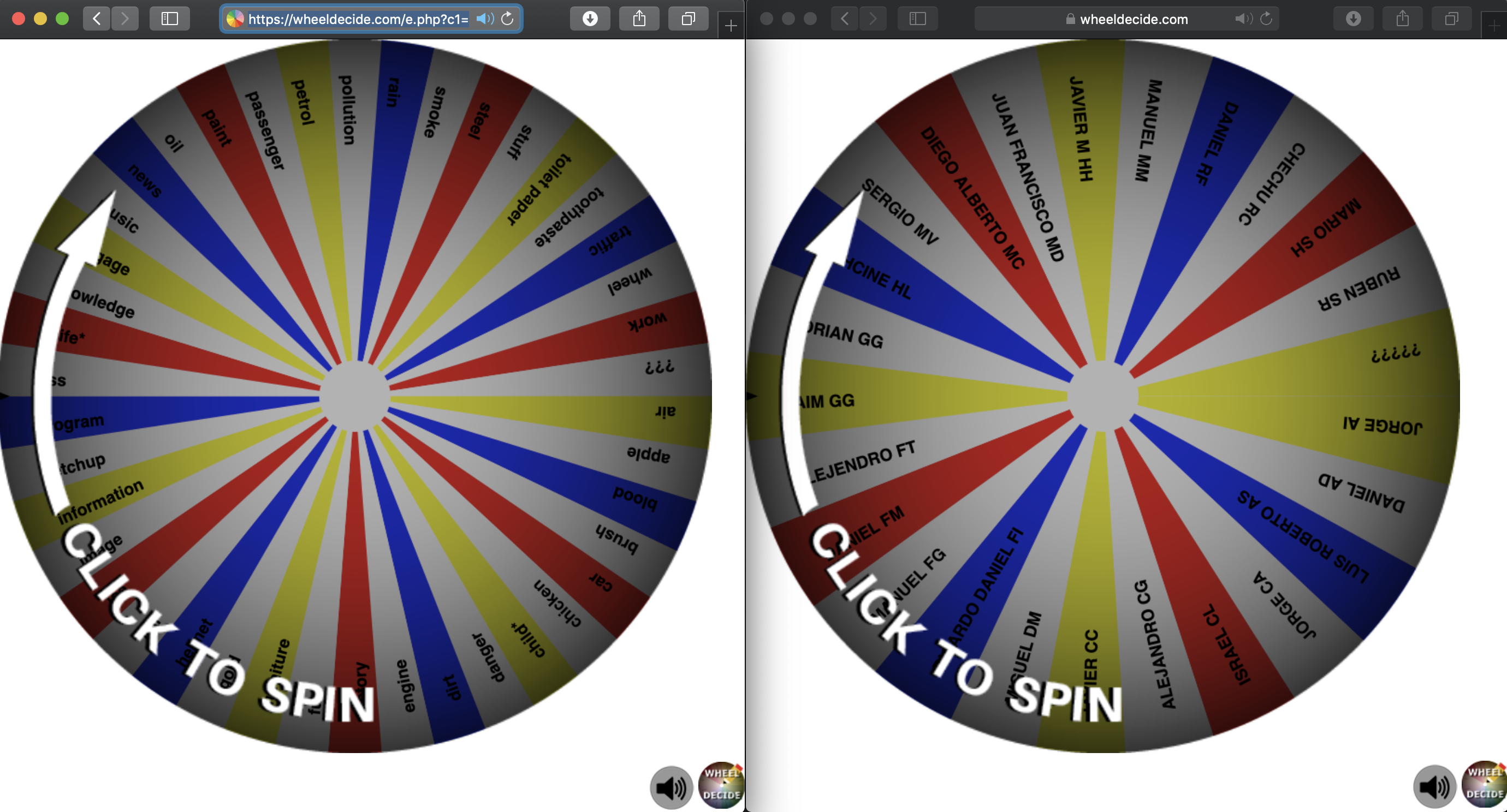
Quick description: In teams, students race to match up 40 English nouns with their Spanish definition, then categorise those nouns as either ‘countable’ or ‘uncountable’. In the final stage, the whole class participate as the online ‘Wheel Decider’ selects a noun, then a student. The selected student has to create an appropriate ‘How many’/’How much’ question to gain their team a point.

Sub-skills practised: 
Spelling out names, vocabulary practice

Teaching Materials / requirements:

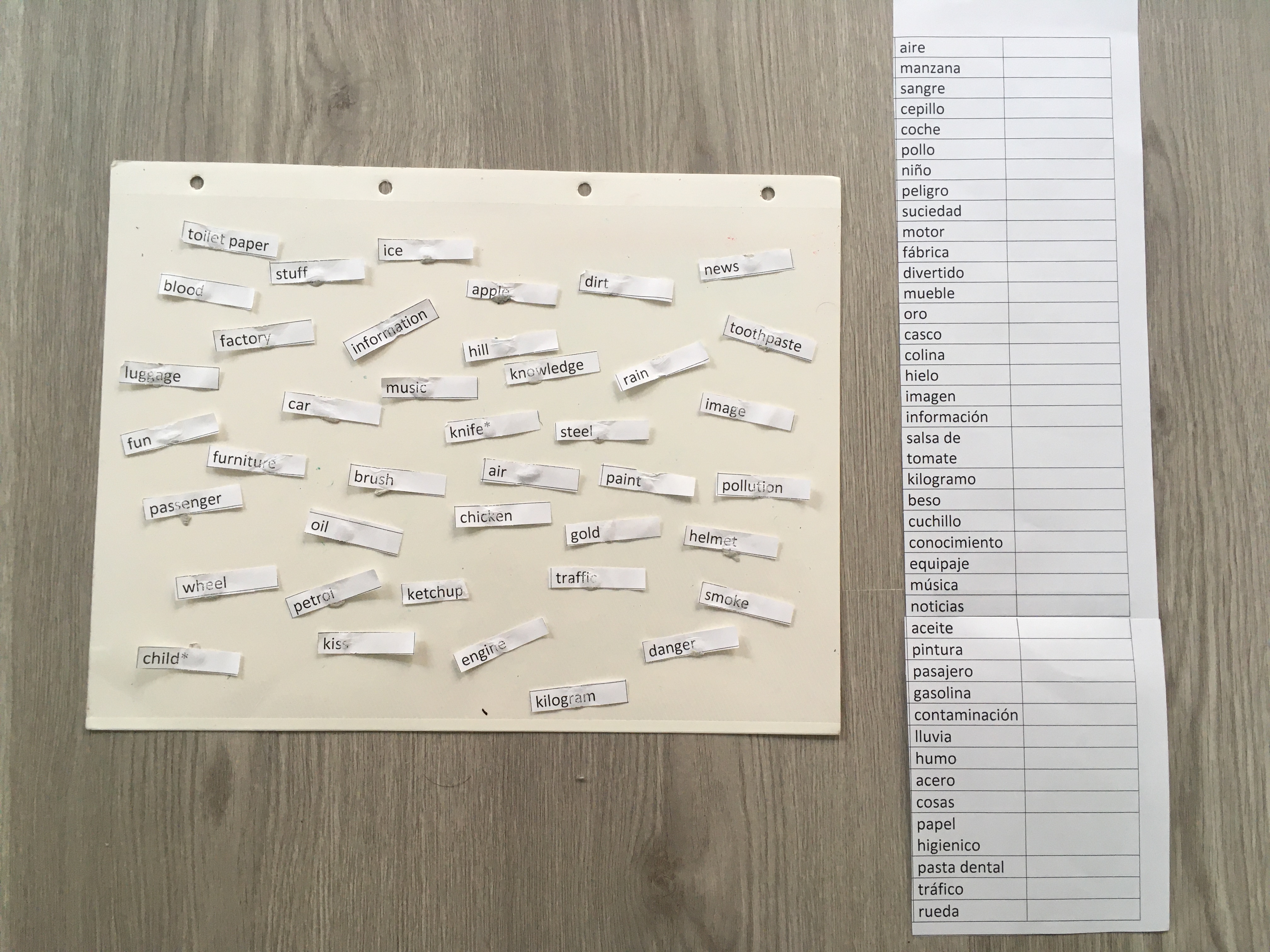
• Workboards (eg photograph album pages – available from bazaar shops) (1 per team)
• Blutac
• Spanish translation grid (1 per team)
• 40 noun paper slips  – individually cut up (1 set per team)
• Red, blue and black whiteboard pens
• An internet connection (to http://www.wheeldecide.com)
(LINK TO WORD SPINNER: https://tinyurl.com/TPIM-countable)
• A projector 
DOWNLOAD LINKS: word doc of lesson plan definition grid and noun slips

Preparation:

  • Print out the Spanish translation grids (stick pages together to form a single grid sheet for each team).
  • Print out nouns and cut-up. Blutac each whole set in a random cloud onto workboards.
  • A word document with quick links to the ‘Wheel Decide’ online spinner.

Assumed knowledge:

Students will already have encountered the idea of countable and uncountable nouns, though with such a mixed ability group this knowledge/ability may be weak or non-existent. 

Anticipated problems > solutions:

  1. loss of parts > have a spare set of noun paper slips ready to fill the gap.
  2. Technology failure > replace the online Wheel Decider by having students write down their names on sheets of paper and put them in a ‘hat’, have a set of nouns already prepared in another ‘hat’. 

Lesson plan and rationale:

1. Tell students we’re going to play a game. Divide the class into groups of 3-5, depending on class size. (Option: chose team captains and get them to pick teams.)

Rationale: By making it a team game / competition, students are more engaged and motivated. 

2. Get up a blank word document and project it on the board. Go round the class asking each student to spell their name. If any students have the same name, make sure you also include an initial. (Optional alternative: If you have a class list in advance, you can pre-create the Wheel Decider – although be aware that unexpected absences can lead to confusion during the game itself – when names of absent students are selected.) 

Rationale: As well as providing some alphabet pronunciation practice, this process gives you a full list of names with which you can create the Wheel Decider.

3. Explain the first part of the game (before handing out the game kits). They have to stick the noun slips into the grid. When the team has finished they must raise their hands.Points are awarded for first place. (In a class of 5 teams, 5 points goes to the first finishers, 4 points to the next, and so on..  Note: I’ve found you don’t necessarily have to explain this point structure, they can work it out as it’s happening.)


Ask each team captain to come up and collect: 
• a workboard with the nouns stuck on them and 
• a grid with a Spanish translation of each word.

Rationale: This section ensures that students understand the definitions of the words. Most of them will be familiar to students. Note: it’s possible to adapt nouns to suit a specific vocational subject (eg a mechanics course might include petrol, gas, dirt, steel, material etc).

4. As students begin, go round the class to ensure they understand the task. Perhaps demonstrate by placing one noun for them. While they are doing the task, go to www.wheeldecide.com and create a random spinner (to randomly select a name). In a second browser window, retrieve the spinner containing the nouns. (https://tinyurl.com/muchmanyspinner).

5. Go round the class helping the weaker teams a little. (Note: you can decide if you want to allow the students to use their phones as dictionaries during the game.) When a team finishes, check their grid. To make this easier for the teacher (unbeknownst to the students) the English nouns are all in alphabetical order if the students have completed the task correctly. Award the team their points (noted on the whiteboard) and immediately start that team on the next task…

6. As a team finishes their grid, write two headings on their (now empty) ‘noun boards’: ‘Countable’ (in blue) and ‘Uncountable’ (in red). Tell the team to stick each noun under the correct heading.

.

Rationale: this part ensures that student know which nouns are countable/uncountable before being tested in front of the class in the following stage. Builds confidence in their participation.

7. Again, as each team finishes, go over and check. For quick finishers tell them “There are 4 in this column that should be in the other column.” Perhaps denote this on their boards by writing it in whiteboard pen. Leave them to try and correct it.

Rationale: gives teams carelessly quick teams time to rethink. The process of working it out should embed the correct answer more firmly in their minds. 

8. As each team finishes correctly, award them their points and tell them to complete (in their minds) the two sentences you have written on the board:

How _______ apple_  ____ there?

How _______ petrol ___ there?

Rationale: this give fast teams a task to do while they wait for the other teams to catch up. You can give extra help to slower teams to keep the lesson moving.

9. When the whole class has finished, as for a solution to the unfinished sentences. Give a point for each. Ask (eg) ‘Is petrol countable or uncountable’. Match the colours to the title heading on the students individual boards (ie countable in blue, uncountable in red.) Draw attention to the plural ‘s’ in the countable example.

10. Leave the two examples on the board. Then turn to the Wheel Deciders. Spin the noun spinner first to select a random noun. Then spin the student name spinner to select a random student. That student must correctly form a ‘How much’/’How many’ question following the template. A correct answer wins one point for their team.

         COUNTABLE:      How many apples are there? 
   UNCOUNTABLE:       How 
much petrol is there?

Rationale: By randomly selecting the students using this fun spinner, the students remain engaged. By selecting the noun first, all students are encouraged to think of an answer (just in case their name is selected). Note: the wheel is quite unfair, as it may select lots of people from the same team. But this leads to an extra element of fun / luck.

11. As student get good, wipe off many and more from the board examples. Then later wipe off are and is. Finally collect the boards so that students have no help at all.

12. Just before the bell goes, tot up the scores for each team tally and declare the winners.

Design a site like this with WordPress.com
Get started